*By Jennifer Zhang*
When an ABB ACS800 or the older ACS600 trips mid-shift, the panel is handing you a diagnosis. Both families share the same Direct Torque Control (DTC) platform and fault-code system: the numeric codes below are logged by the ACS800 standard control program and mapped in ABB's ACS600 documentation. This guide covers the codes we see most often, with the root causes and the steps that clear them. When you need spares fast, our ABB inverter collection stocks ACS-family boards and drives.
On an ACS800, a trip shows as a code plus name (for example, "2310 OVERCURRENT"), the fault logger stores the last events with a time stamp and a 32-bit fault word in signal group 04 FAULT INFO. The ACS600 CDP-312 panel shows the same names, and the same numeric codes appear in the fieldbus fault register. Record the code, the auxiliary word in 4.01/4.02 and the operating state before resetting — it separates a wiring problem from a failing power module.
Fault manifestations: The drive trips instantly at start, during acceleration, or under a load step because output current has exceeded the internal trip limit.
Root causes: A jammed or overloaded machine, an acceleration ramp too short for the inertia, a short in the motor cable, or power factor correction capacitors/surge suppressors left in the cable (forbidden with DTC drives). A damaged IGBT also trips 2310 with no load connected.
Repair steps: Verify the machine rotates freely, then lengthen the acceleration ramp in parameter group 22. Megger the motor and cable phase to phase and to ground, and confirm no PFC capacitors are wired in. Disconnect the motor and retest — if it still trips unloaded, the inverter module needs service; otherwise re-check the group 99 motor data against the nameplate.
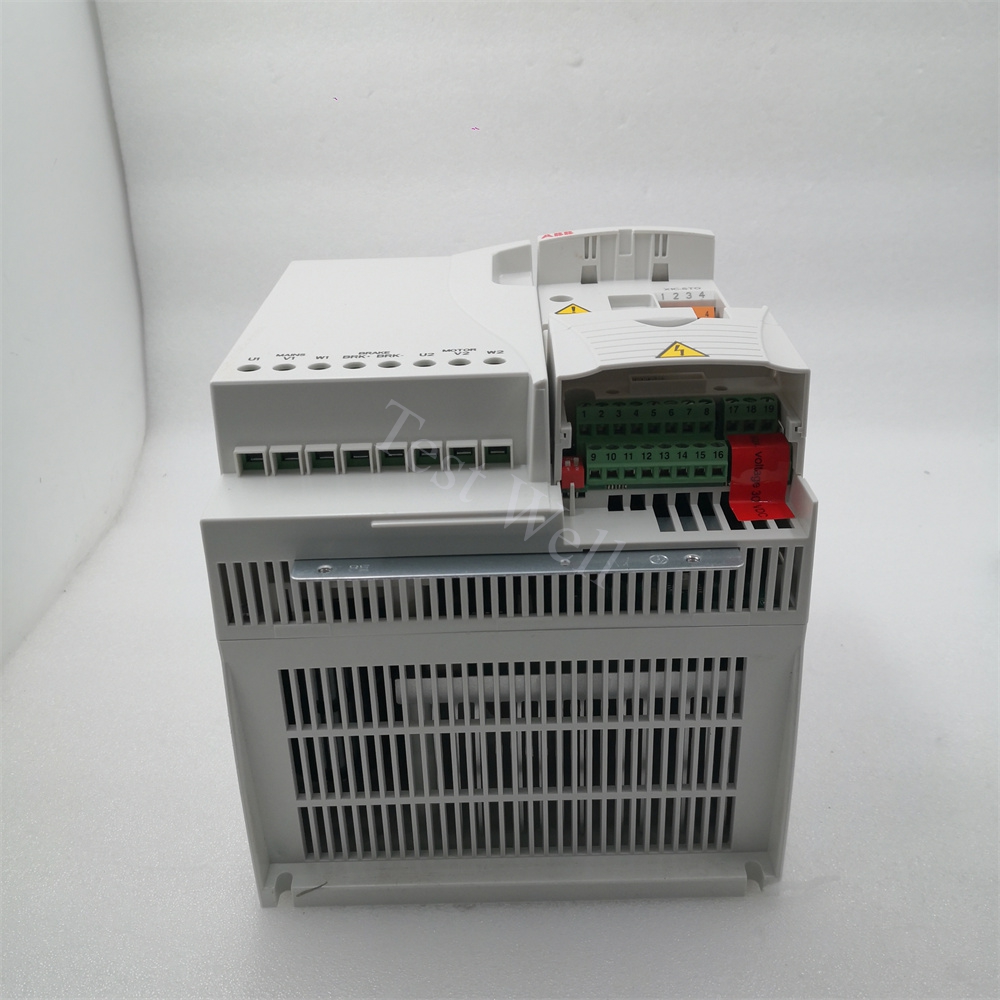
Fault manifestations: A violent, immediate trip, often the moment output is enabled — the firmware flags a short in the motor circuit or a failed output bridge.
Root causes: Motor cable damage, a winding short phase-to-phase or phase-to-ground, moisture in the terminal box, or a blown IGBT in the output stage.
Repair steps: Isolate the drive, then megger the motor and every meter of cable and inspect gland areas for water ingress. If the motor side is healthy, the output bridge is damaged — the replacement module must be tested before restart, and the cable fault that killed it fixed first.
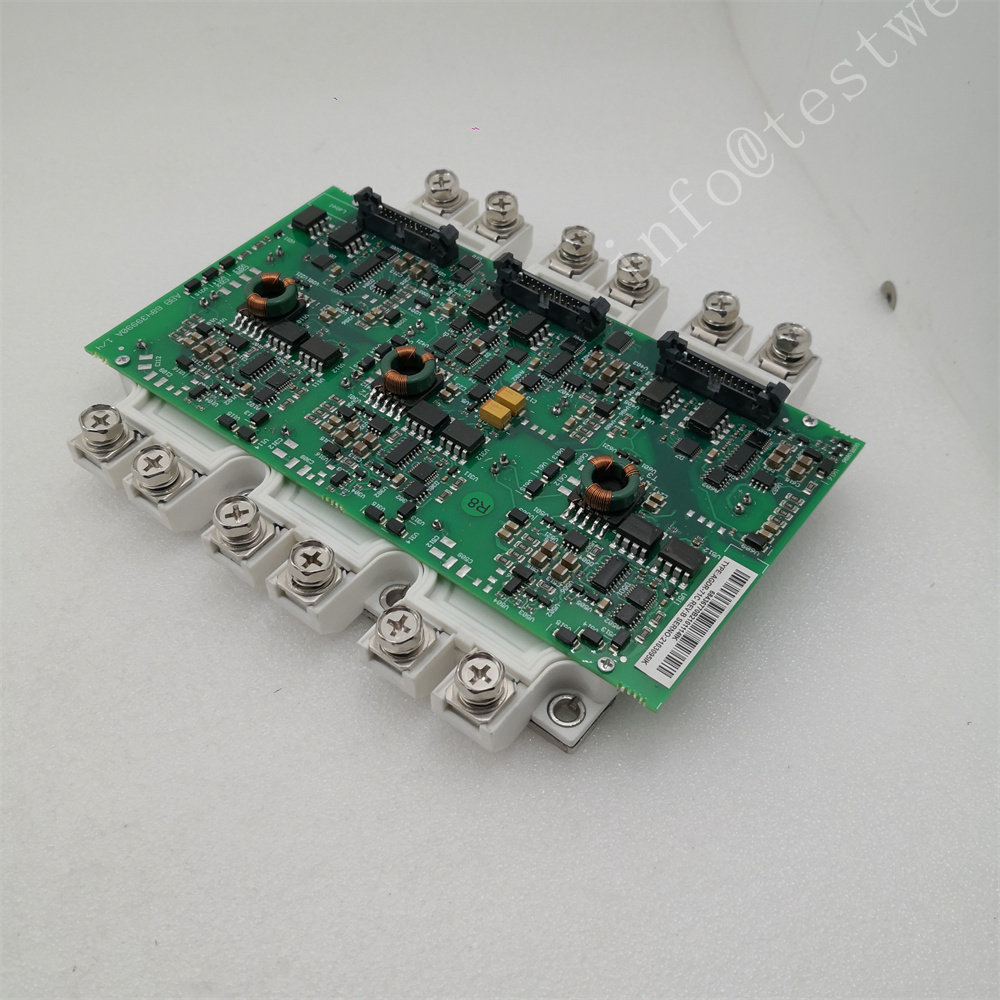
Fault manifestations: The drive reports load imbalance; on parallel-module units, CUR UNBAL xx names the inverter module (1–12) that saw it.
Root causes: An earth (ground) fault in the motor or cable, insulation breakdown under load, or — if insulation tests clean — a failing current-sensing or inverter stage.
Repair steps: Megger the motor and cable to ground; anything below roughly 1 MΩ at working temperature needs drying out or replacement. Remove any capacitor-based filters wired incorrectly to ground. If insulation is clean and the fault returns, the module stage needs ABB service.
Fault manifestations: Trips during deceleration or when an overhauling load (downhill conveyor, unwinder) regenerates. The DC bus has exceeded 1.3 × 1.35 × U1max — about 728 VDC on a 400 V unit, 877 VDC on a 500 V unit.
Root causes: Deceleration ramp too short, no brake chopper/resistor on a regenerative application, mains transients, or a brake chopper that never fires.
Repair steps: Confirm overvoltage control is enabled (parameter 20.05) and extend the deceleration time in group 22. Verify the brake chopper and resistor are correctly connected, and the chopper transistor actually switches. For persistent regeneration, fit a chopper and correctly sized resistor.
Fault manifestations: 3220 means the DC bus fell below roughly 307 VDC on 400/500 V units (425 VDC on 690 V units); 3130 means DC bus ripple of about 13% — typical of a missing supply phase.
Root causes: Blown input fuses, a tripped or single-phasing contactor, loose input terminals, unbalanced mains, or a damaged rectifier bridge inside the drive.
Repair steps: Measure all three phases at the drive terminals under load, check every input fuse and tighten lugs. Verify mains balance at the incoming panel. If the supply side is proven good, the rectifier bridge requires service.
Fault manifestations: Trips after long operation at high load — the IGBT temperature model hit its trip limit. ABB's ACS600 documentation quotes a 125 °C inverter-module trip for the same condition.
Root causes: Failed cooling fans, blocked heatsink fins and air filters, ambient above 40 °C without derating, or motor power larger than the drive rating.
Repair steps: Clean the heatsink and replace clogged filters and dead fans — this alone clears most trips. Measure the cabinet ambient and derate the load if it exceeds 40 °C. Compare the motor kW with the drive rating. Related 4110 CTRL B TEMP (control board above 88 °C) is fixed the same way.
Fault manifestations: The motor thermal model (4310) or a real PTC/KTY thermistor wired to digital input DI6 (4311) reports motor overheating.
Root causes: Genuine overload, insufficient motor cooling (clogged fins, failed shaft fan), wrong motor data in group 99, or a broken thermistor circuit that mimics an overheat.
Repair steps: Measure — is the motor actually hot? If it is, fix the cooling path or the load. If it is cold, check thermistor continuity and the 30.04–30.09 protection settings, and re-enter the nameplate data. Let the motor cool after a genuine overheat; repeated hot restarts destroy windings.
Fault manifestations: 7121 trips when the motor stalls under load; 7123 trips when speed runs more than 40 Hz beyond the configured maximum.
Root causes: Stall — a mechanical jam or an undersized drive/motor. Overfreq — wrong min/max speed limits (20.01/20.02 or 20.07/20.08), insufficient braking torque, or sudden load changes in torque control.
Repair steps: For stall, free the machine, check the coupling and verify load current; adjust the 30.10–30.12 stall parameters only after the mechanics are sound. For overfreq, correct the speed limits and add a brake chopper/resistor if the load regenerates.
Fault manifestations: 5210 means the fiber-optic link between the control board and the power stage (on the ACS600, the NINT interface card) has failed; 5300 means the active control panel or DrivesWindow lost communication. A related 9000 EXTERNAL FLT comes from equipment wired to the drive's digital inputs, often ABB S800 remote I/O modules.
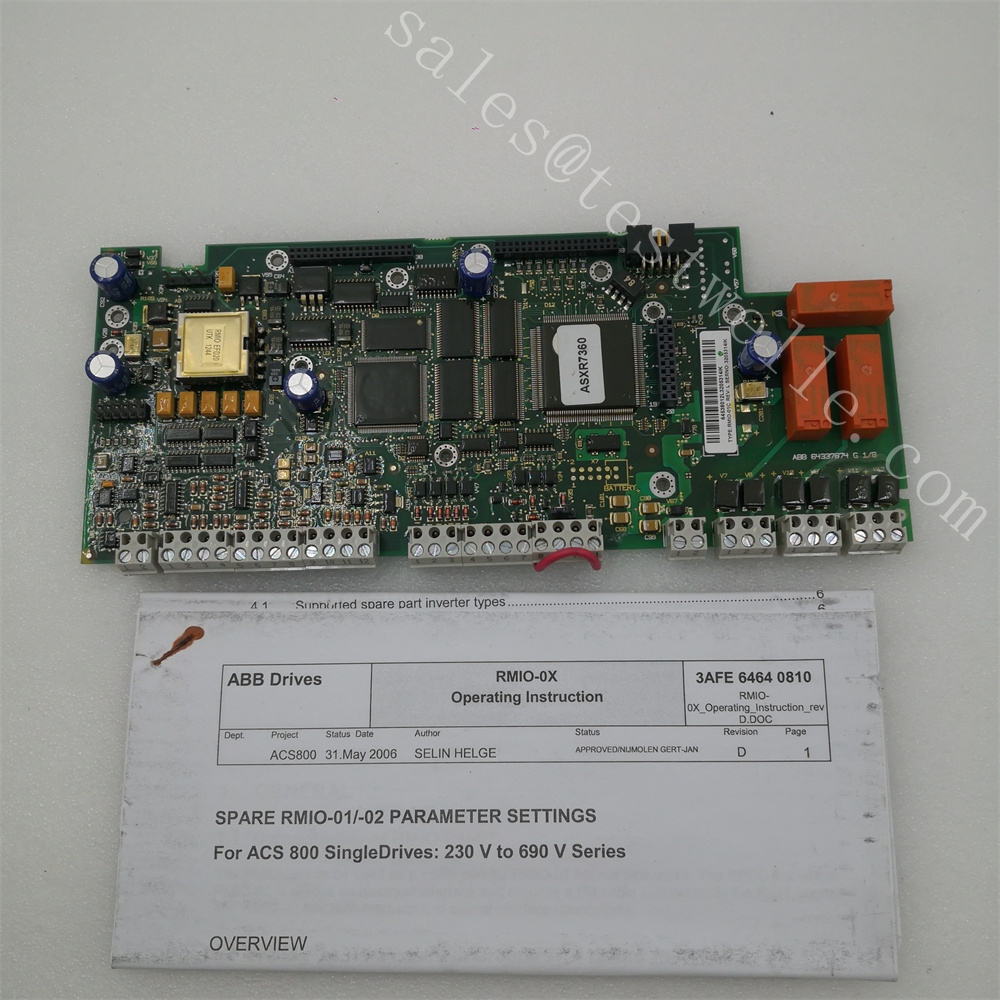
Root causes: Dirty or kinked fiber, an unplugged panel, a failed RMIO/NINT control board, interrupted 24 V auxiliary power (check parameter 16.09 CTRL BOARD SUPPLY), or a genuine external device fault.
Repair steps: Re-seat or replace the fiber jumpers and check signal 03.19 for the failing channel; if a control-board replacement is needed, the ABB NINT-52 interface board is a stocked spare for ACS600-class units. For 5300, re-seat the panel and test it on another drive, then check the 30.02 PANEL LOSS settings. For 9000, find the device that opened its fault contact — often an input module such as the DI103A or 3BSE022364R1 — and repair that machine before clearing the drive.
Clear a fault with the panel RESET key, a digital input assigned in parameter 16.04 FAULT RESET SEL, or automatically via parameter group 31. Auto-reset suits nuisance events such as brief supply dips — never 2340 SHORT CIRC or 2330 EARTH FAULT, which must be investigated first. A drive that resets itself into the same fault is telling you the problem is still there.
Every 6–12 months, blow out heatsinks and filters, replace worn fans, torque-check power terminals and megger the motor circuit. Once a year, back up parameters from the panel or PC — a saved set turns a control-board swap from a day of re-tuning into a ten-minute restore.
Are ACS800 and ACS600 fault codes the same? Yes — both DTC families use the same numeric codes (2310, 3210, 3220, 3130, 4210, 4310, 7121, 5210, 5300 and so on), so one routine covers both.
Why does my drive trip 3210 only when stopping fast? Kinetic energy flows back into the bus. Lengthen the deceleration ramp, enable overvoltage control, or add a brake chopper and correctly sized resistor.
Can I run the motor again after an earth fault clears? Only after the insulation measures healthy — repeated hot resets bake carbon leakage paths into winding insulation.
Spares for ACS-family repairs are available from Test Well with worldwide shipping.


