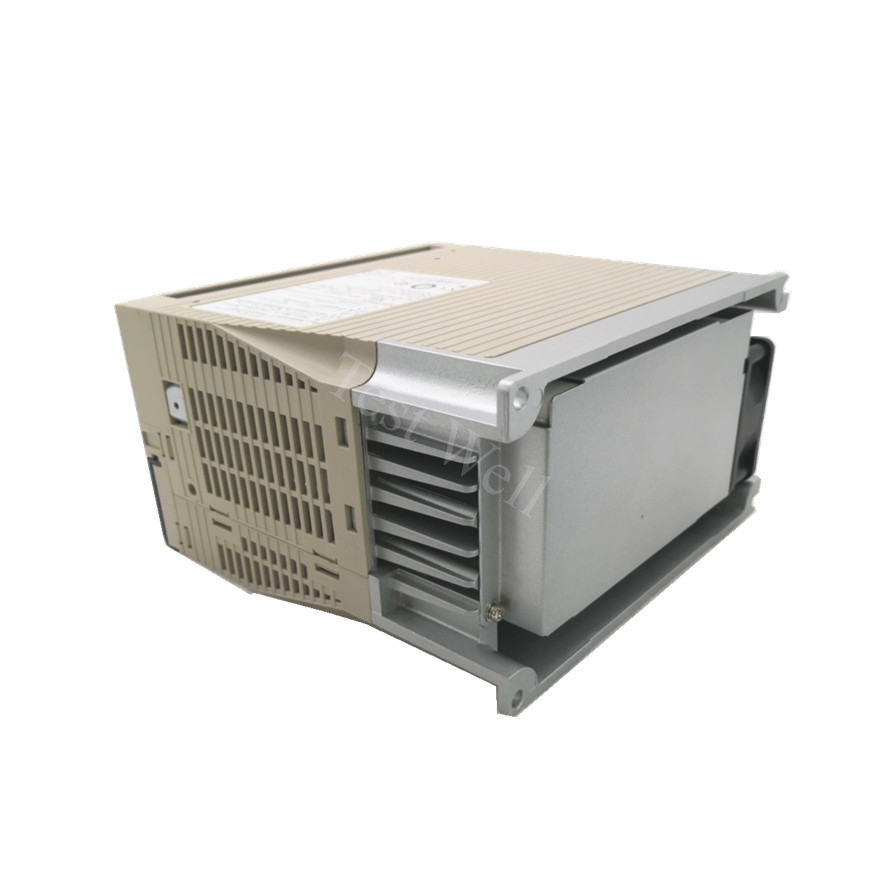
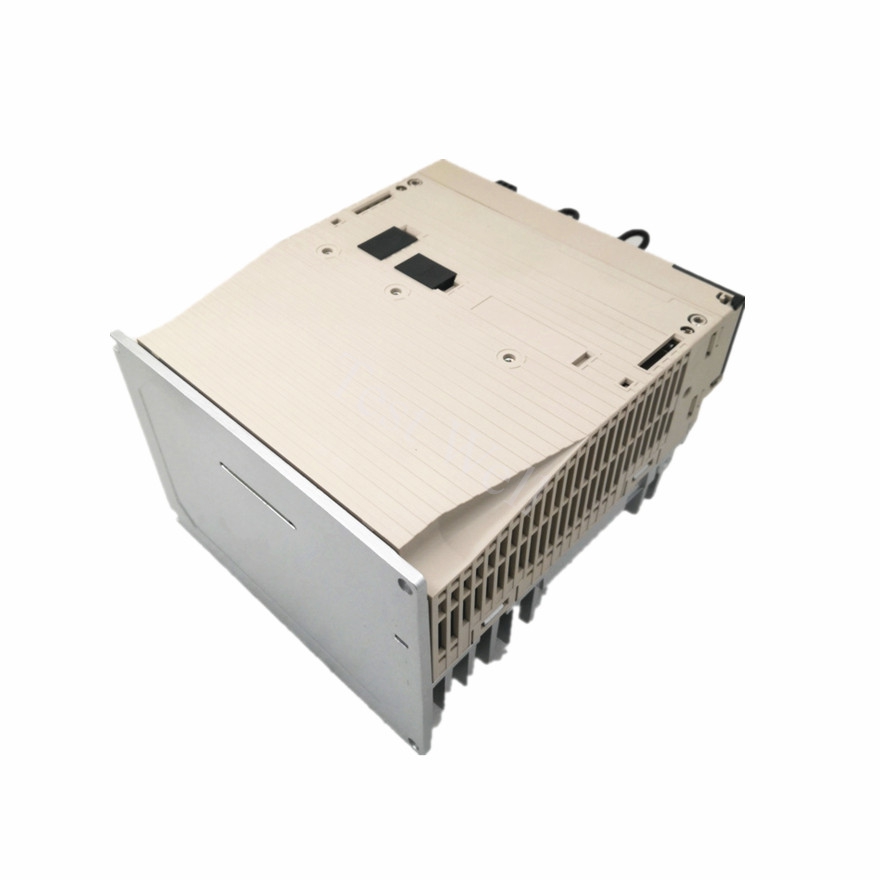
The Yaskawa J1000 (CIMR-JC series) is Yaskawa's compact, simple V/f control drive, from 100 V single-phase to 400 V three-phase, about 0.1 kW to 7.5 kW. It runs small conveyors, pumps and fans, and when it trips it shows the same letter-coded faults as its bigger siblings.
Most J1000 service calls are not a dead drive — they are a code read before the motor and cable were isolated, or a parameter error from a hurried commissioning. This guide covers the faults and operating errors technicians actually meet, verified against the Yaskawa J1000 Technical Manual (SIEP C710616).
Please check our Yaskawa inverter and VFD range — CIMR-JC4A0004 and comparable J1000 references are among the units we stock — if you are sourcing a replacement drive rather than repairing.
For board-level work we also carry IGBT modules and drive boards for power-stage repair.
The J1000 digital operator separates three classes of message:
Read the fault history on the operator before resetting — a code at 50% load means something different from the same code at full load.
Fault Manifestations. Trips on start or during acceleration, sometimes with a blown input fuse.
Root Causes. Short or ground fault on the output, mechanical jam, acceleration too short, wrong motor data or V/f pattern, or a contactor switched on the output.
Repair Steps. Isolate, let the bus discharge, disconnect U/V/W, and megger the motor and cable (above 10 MΩ is acceptable). Spin the motor by hand — a seized bearing looks like an electrical fault. If it trips with no motor connected, the output stage is damaged; if it runs clean unloaded, extend the acceleration time, verify motor data and re-run autotuning.
Fault Manifestations. Trips during deceleration of high-inertia loads, or when the load overhauls the motor.
Root Causes. Deceleration too short, stall prevention disabled, a broken braking chopper or resistor, or input voltage too high.
Repair Steps. Lengthen the deceleration time, enable stall prevention (L3-04), and measure the braking resistor and chopper. For persistently regenerating loads, add an external braking resistor sized to the duty.
Fault Manifestations. Trips on starting large loads or during sags; occasionally a brief flash that clears itself.
Root Causes. Supply failure or one input phase lost, a weak supply, or DC bus voltage below the detection level (L2-05).
Repair Steps. Measure all three input phases at the drive terminals under load, not at the panel meter. Torque the input lugs — most persistent UU1 cases end at a loose terminal.
Fault Manifestations. oL1 (motor overload, the drive's I²t model) trips after minutes of steady running. oL2 (drive overload) trips when the load is too heavy for the drive rating.
Root Causes. Real mechanical overload, undersized motor or drive, and above all a wrong motor rated current in L1-01.
Repair Steps. Set L1-01 to the nameplate FLA, then clamp all three phases against it and find the mechanical drag. Move up a frame before disabling the protection.
Fault Manifestations. oH (or oH1) trips after 20–60 minutes, worse in summer or a sealed panel.
Root Causes. Failed or sluggish fan, clogged fins, restricted airflow, or ambient above rating.
Repair Steps. The J1000 fan draws air through the heatsink, so a blocked inlet or exhaust kills cooling. Verify the fan, vacuum the fins, and measure ambient near the drive.
Fault Manifestations. Trips immediately, often on power-up or run command.
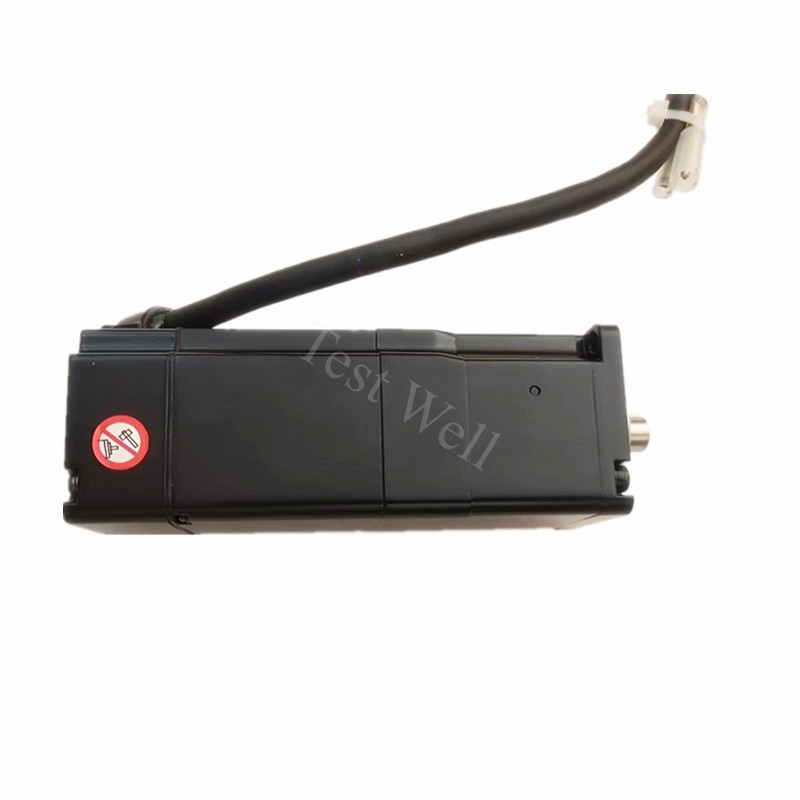
Root Causes. Ground leakage above roughly 50% of rated output current — broken insulation, water in the conduit, or excessive output capacitance.
Repair Steps. Megger the motor phase-to-ground and phase-to-phase. Disconnect the motor: if the fault persists with the motor out, the drive output stage is damaged. Reduce the carrier frequency for long cables.
Fault Manifestations. Trips instantly on run; repeated resets usually end in a failed output module.
Root Causes. Short circuit in the motor or cable, or a failed IGBT stage.
Repair Steps. Never keep resetting — isolate, megger the motor and cable, and check output terminals. If the drive faults with the motor removed, the power stage needs repair or replacement.
Fault Manifestations. rr (braking transistor fault) means the internal braking transistor has failed. rH (dynamic braking resistor overheat) appears during heavy regen duty.
Root Causes. A failed braking transistor, or a braking resistor used beyond its duty or wattage.
Repair Steps. Cycle power for a transient rr; if it returns, repair or replace the drive. For rH, check the braking resistor value and duty, and lower the regen energy with a longer deceleration.
Fault Manifestations. The motor stops (fault) or is held (alarm) when an external device trips the drive through a digital input or option card.
Root Causes. Forward and reverse held together for over 500 ms, a safety interlock opened, or a digital input mapped to an external fault that was never wired.
Repair Steps. Check the digital input wiring and the function assigned to S1–S6, confirm the sequence is not commanding forward and reverse at once, and clear the external cause before resetting.
oPE codes are not faults; they block start until a parameter conflict is fixed:
A full reset (A1-03 initialize) clears an oPE only after the setting is corrected.
CE means the drive did not receive valid data for more than about two seconds — check the RS-485 / MEMOBUS wiring and shielding, verify baud rate and node address, and keep the pair away from power wiring; a noise filter and grounded shield resolve most trips. UU2 (controller undervoltage) and UU3 (DC charge circuit fault) are hardware faults on the control or precharge side — cycle power, and if they persist the drive needs a board repair.
| Interval | Task | Prevents |
|---|---|---|
| Quarterly | Vacuum heatsink fins; check fan | oH, oH1 |
| Annually | Torque input and output terminals | UU1, SC |
| Annually | Verify motor data L1-01 and V/f | oL1, oL2 |
| Every 2–3 years | Megger motor and cable | GF, SC |
| On commissioning | Save parameters; label braking resistor | oPE, rr, rH |
What is the difference between oH and oH1?
Both are heatsink overheating detections. oH is the standard heatsink trip; oH1 is reported through the alternate thermistor path. Treat them identically — fix the cooling problem.
Why does my J1000 show oPE05 after I removed an option card?
b1-01 or b1-02 still points the run command or speed reference at an option that is no longer fitted. Reinstall the option or set b1-01/b1-02 back to the terminal-block source, then reset.
My J1000 trips oC with no motor attached — is the motor bad?
No. oC with the motor disconnected means the output stage itself is faulty (IGBT or gate drive). That is a board repair or drive replacement, not a motor problem.
Browse our full inverter and drive range for J1000, V1000 and comparable compact drives.


